When you run a training program, the manikins you choose become the backbone of your outcomes. Poorly Medical simulation equipment Canada built devices teach bad mechanics, skew assessment, and can even fail mid‑class, wasting a day you cannot get back. This is especially true for CPR instruction, where compressions, recoil, and ventilation feedback must be precise and consistent across students. The Canadian market has matured over the last decade, with more models available and more distributors shipping nationally. That growth has drawn in grey imports and outright counterfeits that mimic the look of major brands, then fall apart under normal use.
I have evaluated and maintained fleets of training manikins for community programs, hospital education departments, and public safety agencies. The same themes come up every season. Trainers buy an attractive bundle at a suspiciously low price, only to discover it has no manufacturer warranty in Canada, the feedback lights do not calibrate, the torsos crack around the spring plate by week six, or the lungs do not seal properly. Recovering from a bad buy costs real money, and it undermines instructor credibility. The good news is you can avoid almost all of these pitfalls with a practical sourcing plan and a few verification habits.
Why counterfeits and grey imports slip into Canadian programs
Demand spikes drive risky purchases. A provincial initiative requires hundreds of students certified this term, your regular supplier is backordered for four to eight weeks, and an unfamiliar website promises five Prestan sets at a big discount with two‑day shipping. Or your budget year is closing and you need to spend remaining funds by Friday. Under time pressure, buyers accept vague claims, such as, “Compatible with all major lung bags,” or “Same as Prestan, just no logo.”
International marketplaces have intensified the problem. Third‑party sellers advertise “Prestan‑style” or even “Preston” manikins. The photos show the right silhouette and a carry bag that looks close to the real one. Once the boxes arrive, you find mismatched skin tones between torsos and heads, no documentation in English or French, no Health Canada import label, and no serial numbers you can register. These products often copy the outer shell while ignoring core mechanics. Springs are either too soft or too stiff, resulting in compression depths that do not match guideline targets. Feedback modules light up but are not calibrated to rate or depth in a reproducible way. Instructors sense something is off when students do well on these manikins, then fail skill checks on certified equipment.
Grey imports are not fake, but they come through unauthorized channels. That means you might receive a legitimate unit intended for another market. Firmware might differ, power supplies may not meet Canadian electrical specs for adjunct devices, or the warranty is limited to the original region. If a head splits at the seam, you discover you are responsible for international shipping to get service. The price difference shrinks fast when you factor in parts, freight, and downtime.
Understanding the brands and product tiers
Prestan and Laerdal dominate entry to mid‑range CPR training for community programs in Canada. They are not the only choices, but they set the baseline. Knowing the key features will help you spot imitations and make fair comparisons.
Prestan targets high‑volume instruction with rugged shells, realistic chest rise, and a simple visual feedback system. The Professional Adult and the Professional Infant have built‑in compression rate indicators, and recent Series 2000 versions add Bluetooth connectivity for app‑based metrics. Prestan also offers Ultralite models that collapse for travel. These are popular for lay responder courses where instructors need to move multiple sets in small cars. Genuine Prestan torsos feel rigid at the frame with a predictable spring that clicks near appropriate depth. The skin has a slightly matte finish, and the nose and mouth geometry is consistent across units for reliable airway sealing. Consumables like lung bags fit cleanly in the head cavity and seat around the neck seal without wrinkles.
Laerdal occupies a broader spectrum. The Little Anne line serves community training with durable torsos and optional QCPR app connectivity. Resusci Anne and Resusci Baby move into high‑fidelity CPR manikins for clinical and professional settings, with more precise feedback and accessory options. When people search for Laerdal manikins Canada, they are generally comparing Little Anne QCPR against Prestan Professional. Either can anchor a program, but the price, desired metrics, and lifespan assumptions differ. Laerdal tends to excel in software polish, while Prestan often wins on cost per student and ease of maintenance. Both brands also produce complementary devices for ventilation and AED https://www.google.com/maps/search/?api=1&query=Google&query_place_id=ChIJoXHy1e0qO4gREEGPq7f45v4 training, and both integrate well into broader medical simulation equipment Canada buyers assemble for labs and classrooms.
Airway training manikins Canada buyers consider sit in a different category. These torsos and heads allow intubation, BVM seals under realistic jaw compliance, and often accept adjuncts like supraglottic airways. They are more expensive, heavier, and outside the scope of basic CPR certification. Counterfeit risk remains, especially for importers that list “advanced airway trainer” with brand names buried in the small print. The stakes are higher because poor airway anatomy teaches bad hand placement and blade technique that students struggle to unlearn.
The business case for buying genuine in Canada
Programs that teach 300 to 1,200 students a year typically calculate return on investment over three to five years. The front‑end price difference between a genuine Prestan set and a lookalike might be 20 to 40 percent. That looks tempting. But factor in success rates, instructor time, consumables fit, and the risk of class failures due to equipment. Real units hold calibration better, accept factory parts, and carry domestic warranties. When I budget for Prestan CPR manikins Canada buyers can service locally, I assume a spare parts envelope per set each year that covers lung bags, face shields, and a few replacement springs. For counterfeits, I add uncertainty, because you may need to scrap an entire torso when a minor component fails.
Warranty enforcement matters. A genuine unit purchased through an authorized Canadian distributor will usually be replaced or repaired without international freight charges. If you run a regional training program with multiple instructors, the value of quick turnaround is not abstract. It decides whether you cancel a class or not. In healthcare education where classes can include interprofessional groups, a cancelled session reverberates across departments and shift schedules.
There is also the compliance angle. Many public tenders and institutional policies require products with traceable serial numbers, bilingual documentation, and clear importation records. Buying domestically through authorized channels checks those boxes. When auditors review inventory and maintenance logs, they expect to see equipment tied to vendors who can provide recall notices and product updates.
How to verify authenticity before you buy
Start with the source. Reputable Canadian vendors state their authorization plainly. You should find a visible statement that they are an authorized distributor for the manufacturer, along with warranty terms that clearly apply in Canada. If those terms are vague, ask for an email from the vendor on company letterhead confirming that the purchase will carry full manufacturer warranty coverage in Canada, not just store credit.
Go to the manufacturer’s website. Prestan and Laerdal maintain distributor or dealer locators. If a seller’s name does not appear, that is a warning sign. It does not end the conversation, because some vendors buy through master distributors. In that case, ask the seller which master distributor supplies them and request a document or email from that master distributor acknowledging the relationship. This sounds formal, but legitimate vendors handle it routinely.
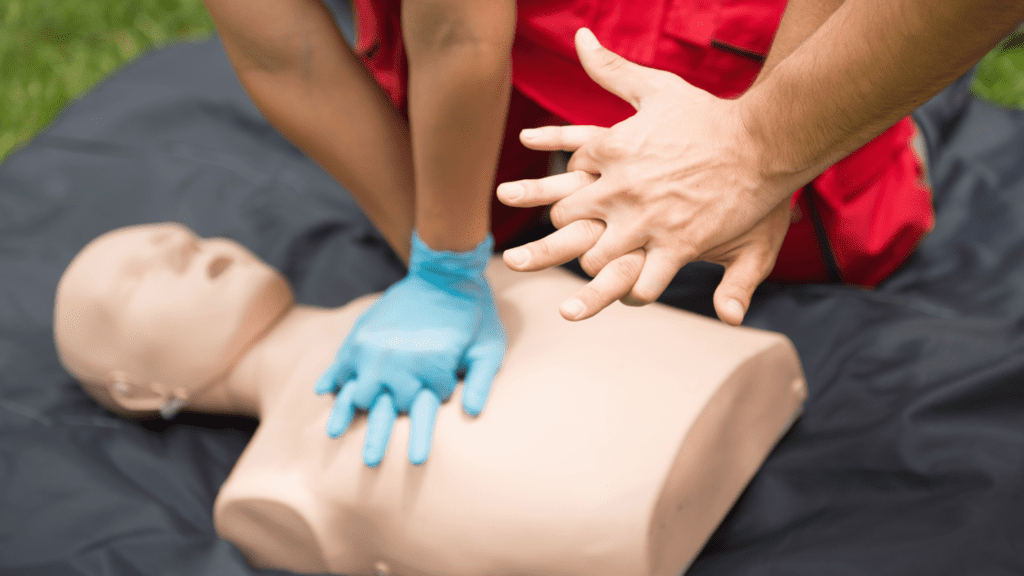
Scrutinize product identifiers. Genuine units ship with model numbers and serial numbers in a consistent format. Labels are printed legibly, often including a QR code. Packaging for the Canadian market consistently includes English and French documentation. Goods imported for Canadian resale also carry importer details on the label. If the unit arrives with a manual only in another language, a mismatched quick‑start card, or a serial sticker that easily peels off without residue, expect trouble.
Check firmware and connectivity claims. For Bluetooth‑enabled models, download the official app for the brand and connect to a demo unit if possible. Genuine devices broadcast predictable identifiers, show firmware versions, and pair without workarounds. Counterfeit electronic modules often appear with generic device names, disconnect under load, or fail to report depth or recoil accurately when tested against known compression rates.
Handle a sample before committing to a fleet purchase. Serious vendors will loan or demo a torso in person or via a short‑term shipment, especially for institutional accounts. Feel for spring consistency across multiple compressions. Watch the chest rise with standard lung bags. Test feedback lights for rate and depth consistency by metronome. Prestan’s compression click feedback should engage smoothly without grinding or asymmetry. I have seen copies that click too early, causing students to train at shallow depths that later fail testing on certified equipment.
Assess consumable fit and availability. Genuine units accept branded airways and face shields that seat without tape or trimming. If a vendor says, “any bag will do,” you are likely looking at a knockoff that leaks at the neck seal or deforms around the airway. Small leaks make a big difference when you teach ventilation to large groups. Students conclude that a good mask seal is impossible because the equipment never properly seals.
Confirm after‑sales support. Ask who handles repairs, parts ordering, and warranty claims. A vendor who says “we will try our best” without naming a process or a contact at the manufacturer is gambling with your downtime. Legitimate sellers point to a service desk, RMA process, and predictable parts lead times. For busy seasons, knowing you can get a pack of torsos, a head assembly, and a spring kit within a week is the difference between delivering courses and rescheduling them.
A practical sourcing workflow that keeps you out of trouble
- Decide on the training outcomes you need, then match to a short list of models. For community programs focused on compression quality and basic ventilation, compare Prestan Professional Adult or Ultralite against Laerdal Little Anne QCPR. If you need app metrics for pass or fail thresholds, confirm that the Bluetooth features meet your assessment rules. For clinical education where you need high‑fidelity CPR manikins with more precise metrics, shortlist Laerdal Resusci Anne or equivalent, and consider how they fit into your broader medical simulation equipment Canada strategy. Identify two or three authorized Canadian vendors. Use the manufacturer’s dealer locator to confirm status. If you work in a public institution, cross‑check with your procurement department’s vendor registry. Ask vendors for written confirmation of Canadian warranty support and lead times. Request a demo or loaner. Set up side‑by‑side tests with your current fleet. Use a metronome at 100 to 120 beats per minute to gauge compression rate lights. Measure durability by running 1,000 compressions on each unit while observing spring consistency. Check that consumables stock aligns with your inventory shelves. Verify documentation, labels, and serials. Before issuing a purchase order, request photos of product labels and bilingual manuals. Confirm that serial numbers on the torso match paperwork. Where possible, pre‑register units with the manufacturer to ensure numbers are valid. Lock in service and consumable plans. Buy spare springs, lung bags, and face shields sized to your teaching volume. Get the name and contact of the service lead who handles RMAs. Keep all purchase confirmations and serial logs in a shared folder for your instructors.
What to do if you suspect a counterfeit
The first instinct is to make do for the next course. Resist that. Pull the questionable units from service until you have clarity. Document everything. Take clear photos of labels, serials, and packaging. Record the purchase date, seller details, and any email promises about warranty or compatibility. Contact the manufacturer’s support team with the serials and photos. Prestan and Laerdal teams have seen most of the tricks and can usually confirm authenticity quickly.
If you confirm a counterfeit or discover that your unit was not intended for the Canadian market, notify your procurement or finance team and the vendor in writing. Request a return authorization on the grounds of misrepresentation. Most reputable payment providers support disputes for counterfeit goods, but the success rate drops if you wait. If the purchase was made on a public contract, loop in your legal or compliance office. They may require you to report the incident and preserve evidence.
Instructors sometimes ask if they should keep fake units as beater torsos for travel. I am not a fan of that plan. Unreliable feedback gets baked into student muscle memory. If you need extra units for overflow classes, look for refurbished genuine equipment from authorized service centers. Ask for service records and test the torsos thoroughly before large events.
Price, freight, and taxes for Canadian buyers
A realistic budget accounts for more than the line item. Expect freight within Canada to vary by distance and weight. A four‑pack of adult torsos with heads, plus carry case, can run 9 to 15 kilograms. LTL shipping to the Maritimes or the Territories costs more than to the GTA or Lower Mainland. If you import directly from a U.S. Seller, add brokerage fees, duties if applicable, and GST or HST. You also risk delays at the border if the paperwork is incomplete. Those delays do not pair well with course calendars.
Buying within Canada simplifies taxes and compliance. You pay GST or HST based on your province, and your institution can usually reclaim the tax as appropriate. More importantly, you obtain a Canadian invoice with a business number that your finance system recognizes. If your warehouse receives the goods, they can inspect labels for the importer’s details and bilingual documentation. Those small checkpoints pay off during audits.
Some buyers try to shave costs with group purchases. That can work, provided the primary account holder is an authorized buyer and the vendor agrees to allocate warranty coverage to each participating institution. Clarify this in writing before funds change hands. If a carry case zipper fails or a head cracks, you want to avoid secondary disputes about which partner owns which serial number.
Training outcomes to use as your north star
The equipment is not an end in itself. It serves the skill. When you evaluate options, measure them against outcomes you promise your students. If your pass rate for compressions drops when you switch manikins, investigate. Are the springs too stiff for youth or smaller adults? Are the feedback indicators intuitive for first‑time learners? In one regional program, we discovered that a batch of torsos had slightly stiffer springs that caused a spike in remediations. The vendor swapped the batch after we presented compression logs and instructor notes. That kind of relationship hinges on buying genuine units from partners who can act on evidence.
Do not underestimate the value of consistent feel across your fleet. Students often switch stations or return for recertification. If half your units require noticeably more force, learners question themselves rather than the equipment. Choose a brand and series, then stick with it across cohorts. When budget cycles allow, upgrade in clusters so classrooms remain uniform.
Finally, devote time to maintenance and calibration checks. Even genuine manikins drift with heavy use. Springs fatigue, feedback modules need firmware updates, and head seals wear. Set a weekly or monthly rhythm. Keep a simple log where instructors jot down issues. Replace consumables proactively. A manikin that leaks air sends the wrong message about mask seal technique. That is not a learner problem, it is a maintenance gap.
How the keywords fit the real buying journey
If you are searching for Prestan CPR manikins Canada because you need durable, easy to service equipment for high‑volume classes, prioritize authorized Canadian distributors who can ship quickly and support parts. Compare against Laerdal manikins Canada if app‑based QCPR metrics are mandatory for your assessments. When your program grows into simulations beyond basic life support, tie your choices to a broader plan for medical simulation equipment Canada buyers often assemble over multiple budget years. That plan may include AED trainers, airway heads, and scenario packages. For airway training manikins Canada has solid options, but buy them through the same disciplined process, because the risk of learning poor technique on a bad airway trainer is real. When your scenarios demand high‑fidelity CPR manikins, test them in your teaching spaces with your instructors. Authenticity checks and a strong vendor relationship matter even more as complexity increases.
A short anecdote from a busy semester
A college program I supported needed twelve new adult torsos before orientation week. Their usual vendor had a six‑week lead time. A new seller promised immediate delivery and a price that undercut the market by almost a third. The boxes arrived quickly, but the heads did not match the torsos in color, the manuals were not bilingual, and the serial stickers looked like they had been printed on an office label maker. During the first large lab, three units lost their chest click on day one, and the instructors spent precious time rearranging students. We pulled the lot, contacted the manufacturer, and confirmed they were not genuine.
The procurement team pivoted fast. They reached out to an authorized Canadian distributor, secured eight genuine units from two warehouses, and borrowed four demo torsos for the first week. We returned the fakes, recovered most of the funds through the payment provider, and standardized on a single series going forward. The lesson stuck. Under pressure, we now insist on written proof of authorization and warranty before placing an order, and we test at least one unit hands‑on before committing to a large buy.
Final checks before you click buy
- Confirm the vendor appears on the manufacturer’s Canadian dealer list or can prove their supply through an authorized master distributor. Ask for Canadian warranty terms in writing. Inspect product identifiers. Look for consistent model and serial numbers, bilingual manuals, importer details on labels, and clean packaging. Avoid units that arrive without traceable paperwork. Test functionality with a demo. Pair Bluetooth units to the official app, verify feedback consistency with a metronome, and check that consumables seat properly without hacks. Align logistics and support. Validate lead times, freight costs to your location, RMA process, and parts availability. Ensure the service contact is real and responsive. Keep records. Log serial numbers, firmware versions where relevant, purchase confirmations, and maintenance notes. Good records help you enforce warranties and spot trends.
Counterfeiters count on rushed buyers and vague documentation. A careful process deprives them of both, and it protects your instructors and learners. Genuine Prestan and Laerdal units deliver the reliability, feedback, and service support that Canadian programs depend on. Spend the extra twenty minutes on verification, and you will save weeks of disruption over the life of your fleet.