Cardiac arrest does not wait for ideal conditions. It happens on a snow-packed sidewalk in Thunder Bay, in a crowded rink in Moncton, in a high-rise condo in Vancouver. When seconds count, muscle memory takes over. That muscle memory is forged in practice, which is why the quality of our training manikins and simulation setups matters more than most people realize. The difference between a basic torso that accepts compressions and a high-fidelity system that measures depth, recoil, ventilation volume, and hand position can translate into real survival gains for patients.
For teams across Canada, this shift toward data-rich practice is already underway. Hospitals, colleges, paramedic services, and community programs are rethinking their fleets, updating from legacy torsos to modern platforms that offer live feedback, analytics, and realistic airway behavior. The questions I hear most often are simple: What features are worth paying for, which brands handle Canadian logistics well, and how do we make the most of our investment?
What fidelity really buys you in CPR training
Fidelity is not a vanity metric. It describes how closely a simulator mimics the human body, but the real value is how it shapes behavior in the room. I have watched learners move from vague, cautious compressions to confident, guideline-compliant performance within a single session, provided the feedback is clear and immediate. High-fidelity CPR manikins typically provide several layers of guidance: visual cues for depth and recoil, audio prompts for rate, digital dashboards for tidal volume and ventilation rate, and post-session debriefs that show exactly where performance drifted.
There is a common misconception that high fidelity always means full-body simulators with complex physiology. In reality, fidelity scales to your goals. If your program focuses on high-quality basic life support, a torso that pairs robust compression metrics with reliable ventilation measurement may be enough. If you teach advanced airway management or team-based codes, a manikin that allows airway maneuvers, supraglottic or endotracheal placement, and integrates with monitors can pay dividends.
Across Canada, I have seen two consistent outcomes when teams upgrade from low to higher fidelity. First, compression quality improves within minutes as learners calibrate their force. Second, instructors gain time and clarity. Instead of hovering to judge depth by eye, they can coach on ergonomics, leadership, and scene flow because the device tracks the numbers.
The Canadian context: climate, standards, and logistics
The work of resuscitation happens in every province and territory, and the logistics follow suit. Cold van bays, long winter drives, bilingual classrooms, and varying power reliability all matter when choosing Medical simulation equipment Canada wide. Devices that boot quickly, tolerate temperature swings during transport, and run for several hours on battery simplify life for paramedic services and rural programs. Storage is rarely perfect. I have opened cases to find a manikin warmed by a baseboard heater, or chilled after a ride in a pickup. Ruggedness is not a luxury in our setting.
Standards also shape decisions. Most programs follow Heart and Stroke Foundation of Canada guidance, aligned with the latest ILCOR recommendations. The best outcomes happen when the tool enforces these metrics with precision. When a device’s default settings match Canadian targets for compression depth and rate, instructors avoid workarounds and learners receive consistent messages. Add bilingual interfaces where needed. Several major brands now support English and French prompts, a small but meaningful nod to our classrooms in Quebec and New Brunswick.
Finally, the supply chain. Buying domestically through distributors who understand warranties, consumables, and loaner programs saves headaches. It is worth confirming that replacement lungs, face shields, and batteries can be shipped within days, not weeks. I have seen courses derail because a single valve went back-ordered.
What modern feedback looks like when it works
A good session with high-fidelity hardware feels different. You start with quiet, focused practice sets, maybe 60 to 90 seconds each. Learners check the tablet or manikin indicator, reset, and try again. The instructor’s role shifts from referee to coach: adjust your shoulder position, stack your elbows, keep your wrists straight, allow the chest to rise. Ventilation feedback guides smaller breaths and well-timed squeezes. By the time you move to team scenarios, individuals have dialed in their mechanics, and attention can turn to communication, task assignment, and defibrillation choreography.
I like to end with a compression-only drill that runs two minutes at a time. The software flags rate creep and recoil fatigue in real time. You can almost see the lightbulb go on as a learner corrects in the moment. When you debrief with a performance summary, patterns jump out. Some teams compress too slowly, some overventilate, some hesitate with defibrillation. The graphs let you show, not just tell.
Brands and models Canadian programs commonly rely on
Canada’s market is well served by manufacturers with long track records, and each brings strengths.
Laerdal manikins Canada programs often choose QCPR-enabled torsos for adult and infant training, especially in hospital and academic settings. The QCPR ecosystem provides detailed compression and ventilation metrics, instructor dashboards, and cloud options for tracking progression. The build quality holds up to high throughput, and accessories for airway and trauma expand scope if your curriculum grows. Many services appreciate the quick pairing with tablets and the stable Bluetooth range in classrooms crowded with devices.
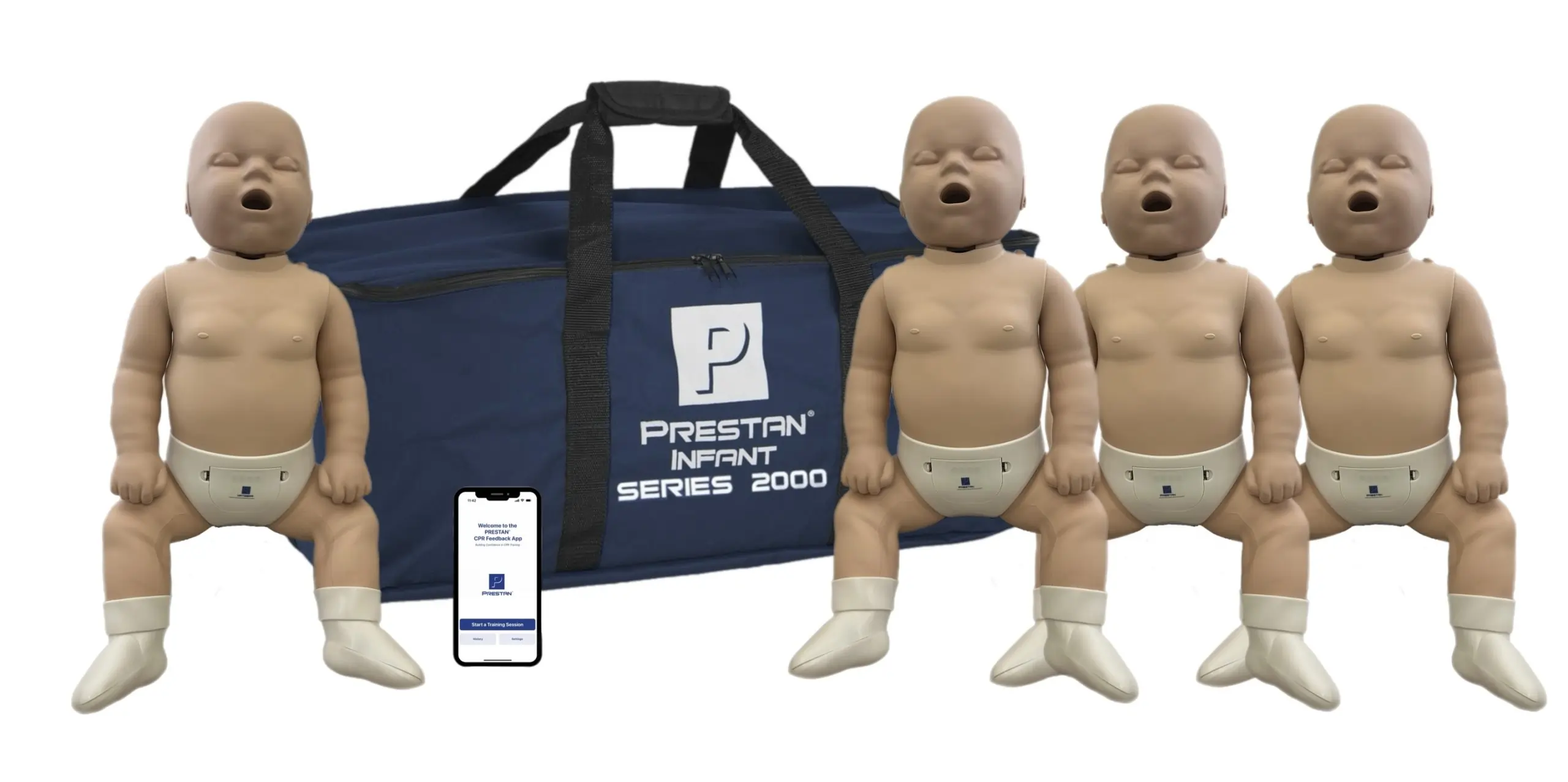
Prestan CPR manikins Canada offerings have become a staple of community programs, schools, and large-scale Basic Life Support courses. They are known for durability and straightforward visual feedback. Prestan’s ultralight adult torsos make transport to community halls and gyms easier. While their feedback can be less granular than some high-fidelity systems, newer models add rate and depth indicators, and the company supports accessory modules for more detailed metrics. For large classes where budget per learner is tight, they are often the pragmatic choice.
When advanced airway is the focus, Airway training manikins Canada buyers often split their purchases. They keep a fleet of CPR torsos for high-volume compressions, then invest in a smaller set of airway heads or integrated airway manikins that simulate tongue edema, jaw stiffness, and realistic anatomy. Laerdal’s airway heads and other specialty models provide a good platform for bag-mask seal practice, supraglottic insertions, and endotracheal intubation with direct or video laryngoscopy. Some programs add standalone trainers to avoid wear on their CPR devices.
Other manufacturers serve Canadian programs as well, and regional distributors can provide demos. The point is not to crown a single winner. It is to match the fidelity and feature set to your teaching goals, throughput, and environment without overbuying features that will sit unused.
Where high fidelity earns its keep
Quality improvement programs get the most out of advanced features. If you run mock codes and track outcomes, the data trails from high-fidelity CPR manikins tighten your feedback loop. A rural hospital I worked with used to debrief subjectively. After upgrading to manikins with analytics, their nurse educator could compare teams over several months. They discovered a pattern of shallow compressions during night shifts. With targeted coaching and more frequent rotations at the two-minute mark, they brought depth back within range and saw an improvement in their in-situ code metrics.
Prehospital programs see similar gains. A paramedic service in the Prairies used QCPR reports to tackle rate creep, a common fatigue effect in the back of a moving unit. By practicing with metronome prompts and immediate feedback, they shaved several seconds off peri-shock pauses and normalized compression rates around 105 per minute. They also adjusted stretcher height during load-and-go practice, a simple mechanical fix that preserved rescuer ergonomics.
In academic settings, the value shows up in remediation. Instructors can identify a student whose ventilation volumes routinely exceed target and schedule a one-on-one session with a single skill focus. Instead of generic advice, they can show the learner three attempts with exact volumes and rates. The learner corrects faster when the evidence is right there.
Scenario design that pairs with the hardware
High fidelity without good scenarios wastes potential. I encourage curriculum planners to start with the decisions they want learners to make, then build around them. For example, if you want to sharpen the switch from compression to defibrillation, set up a scenario where a shockable rhythm appears at minute three, force a quick rhythm check, and require a rapid shock with minimal pause. Use the manikin’s timer and pausing data to measure how well the team protects compression fraction. If you want better ventilations, run a case where an AED is unavailable for the first several minutes, forcing perfect bag-mask technique and controlled volumes. The device will reveal whether rescuers are squeezing too hard or too often.
Airway training works best when learners must choose among viable options. A good airway trainer that simulates trismus or restricted mouth opening AED training accessories Canada pushes them to insert a supraglottic device rather than trying and failing with an endotracheal tube. Mark success not just by placement, but by leak pressures, ventilation quality, and time off the chest.
Infection control and consumables in real classrooms
Canadian programs were already careful with hygiene before the pandemic, and that vigilance has not eased. Choose systems with replaceable lungs, one-way valves, and face skins that clean easily with hospital-grade agents. The consumable budget is not trivial. Plan on replenishing lungs and valves on a schedule tied to throughput. In high-volume courses, rotate face skins and stock plenty of wipes and barriers. Check that disinfectants you use in your facility do not degrade the plastics. I have seen pitting and clouding in face shields after repeated exposure to harsh solutions. Manufacturers will usually specify compatible agents.
If you run blended courses with multiple cohorts per day, build in a five to ten minute turnover process. Assign a learner each session to handle consumable swaps and surface wipes so the instructor can reset the scenario and review data.
Buying smart: what to look for before you sign
A procurement process benefits from clarity. Start by mapping your use cases and constraints, not just your wish list. Instructors teaching med students need different features than a volunteer-led community program. Prehospital training in remote regions calls for durability, simple field repairs, and long battery life. Colleges benefit from robust analytics that integrate across courses and terms.
Consider this short checklist when you evaluate Medical simulation equipment Canada suppliers and models:
- Feedback quality and alignment with Heart and Stroke targets for depth, rate, recoil, and ventilation volumes Battery life, charging time, and resilience to temperature swings during transport Availability and cost of consumables, plus domestic stock levels and shipping times Software usability, bilingual support, and ability to export or archive session data for audit Warranty terms, calibration requirements, and access to loaners or rapid repairs through Canadian distributors
I encourage teams to insist on a live demo with real learners. Five minutes of hands-on practice will reveal quirks that brochures hide. Check Bluetooth stability in your teaching space, not the vendor’s showroom. Pair to your own tablets and confirm that your Wi-Fi policies do not block updates or cloud features you plan to use.
The role of data: teaching, quality, and culture
People do not always love being measured, especially when the numbers expose habits built over years. A respectful rollout helps. Share baseline results with teams without finger-pointing. Aim for incremental improvements, such as moving compression fraction from the low 70s to the mid 80s over a term, or reducing overventilation outliers by half. Celebrate corrections in real time. When learners see that data is a tool, not a trap, they lean into deliberate practice.
Several Canadian programs now fold summary reports into their education records. Over time, the data builds a picture of mastery. You can spot a student who rises early and plateaus, or another who improves steadily with more sets. That evidence informs coaching and, when needed, remediation plans. The same approach supports hospital quality committees as they evaluate code team performance.
Cost, longevity, and the hidden math
Sticker price gets attention, but total cost of ownership carries weight over a five to seven year window. Factor in consumables, batteries, software licenses if any, and the staff hours saved by devices that set up quickly and need little babysitting. I have seen teams shave 10 to 15 minutes off turnarounds with platforms that pair reliably and present clear dashboards. Over hundreds of sessions a year, that time converts to more practice or more classes.
Longevity depends on build quality and handling. Store devices in cases, train assistants to lift by the torso rather than the head, and keep spares of high-wear parts. At least once a quarter, run a maintenance check. Replace worn valves and verify sensors calibrate correctly. A small maintenance ritual extends life and protects your investment.
For programs on tight budgets, a mixed fleet can work. Choose two or three high-fidelity stations with full analytics for coaching and assessment, then maintain a larger pool of midrange torsos for repetition. Rotate learners through the advanced stations each class. It is not all-or-nothing.
Reaching remote and Indigenous communities
Equity matters in resuscitation training. Communities hours from a tertiary centre deserve the same preparation. Portability and simplicity help here. Prestan CPR manikins Canada options, packaged in lightweight cases, travel well by small plane or winter road. Where bandwidth is limited, favor devices that store data locally and do not require constant cloud access. Establish a plan to ship consumables in bulk ahead of seasonal closures.
Partnerships with local health workers and community leaders make programs durable. Train community instructors to run sessions, leaving behind not just gear but a schedule, checklists, and a contact for troubleshooting. Several regions now run annual refreshers that pair CPR practice with AED maintenance checks and public education. The training sticks because it fits the community’s rhythm and realities.
Airway skills in a Canadian winter
A word on airway training in cold conditions. Plastics stiffen. Silicone behaves differently when cold. If you conduct training in garages or community halls mid-winter, give airway trainers time to warm to room temperature before sessions. Otherwise, learners will struggle with mask seals and laryngoscope technique for reasons unrelated to skill. Stow bag-valve masks out of the cold for the same reason. If you teach on the move, a small insulated tote can keep key items within a friendlier temperature range.
When selecting Airway training manikins Canada models, look for realistic tongue size, dental anatomy, and the ability to simulate swelling. Learners should practice recognizing when a bag-mask seal is not working and pivoting to a supraglottic device without excessive delays. The trainer needs to provide clear feedback on seal and ventilation quality, not just tube placement.
Integration with team training and defibrillation
CPR does not happen in isolation. Integrate your manikins with training AEDs and monitors to recreate the task density of a real code. If your teams use specific defibrillators in the field or ward, get matching trainers. Practice hands-on defibrillation choreography that minimizes pauses. The best manikins and defibrillator trainers let you script rhythms, control shock advisories, and measure how much time hands were off the chest during analysis and shock delivery. When you can measure those pauses, you can shrink them.
For advanced cardiac life support courses, align the simulator’s airway and chest mechanics with your medication and rhythm sequences. After teams master the basics, layer in complexities like an obese chest wall or limited space. Rotate roles. A learner who excels at compressions may benefit from a turn managing the monitor, calling switches and shocks with clarity.
Building instructor capacity
No device eliminates the need for skilled instructors. In fact, high-fidelity tools amplify instructor impact when used well. Invest in faculty development. Run sessions where instructors practice interpreting the dashboards quickly and turning them into actionable coaching. Agree on phrases and cues so learners hear consistent language. Create a reference sheet that maps common errors to quick fixes. For example, if rate creeps up, coach a 100 count with a metronome for one minute, then turn the metronome off to see if the learner can internalize the cadence.
Instructors benefit from a light maintenance certification. Know how to update firmware, recalibrate sensors, and replace common parts. That self-sufficiency keeps classes running when a courier is delayed by a snowstorm.
Measuring success beyond the classroom
It is tempting to stop at skill performance in training. The true test is translation to real events. Track key indicators where possible, such as time to first shock in mock codes, documented compression fraction in in-situ drills, or bystander CPR quality in community programs that use feedback devices during practice. Hospitals can link data from simulated and real code reviews to see if changes stick.
Any improvement plan should include a feedback loop to leadership. Share wins and gaps. If you discover that night shift teams suffer more fatigue and rate drift, consider staffing patterns and break schedules during long simulations. If a campus sees chronic overventilation, adjust the airway section of the course and audit bag selection and sizing.
Putting it all together
Canada’s geography and climate make our training challenges distinct, but they also sharpen our focus on what matters. Reliable equipment, immediate feedback, realistic airways, and data-informed debriefs change how people perform under pressure. Laerdal manikins Canada users often leverage QCPR analytics to unify instructor language and track progression. Prestan CPR manikins Canada buyers stretch budgets to reach more learners without giving up essential feedback. Airway training manikins Canada selections help clinicians refine bag-mask technique and device placement in conditions that mirror the field.
Buy what you will truly use. Protect time for deliberate practice with tight feedback cycles. Store and maintain gear with care so it performs after a long drive in the cold. Above all, treat simulation as a craft. The right hardware does not replace good teaching, but it equips you to teach with precision. When that precision becomes habit, patients benefit where it counts, on a rink, a sidewalk, or a ward at three in the morning, when a life depends on the quality of your last hundred practice sets.