When instructors talk about pass rates and confident graduates, they usually end up talking about their manikins. The choice of equipment shapes how quickly students grasp compression depth, how reliably they pace their breaths, and how comfortable they feel trying again after a failed attempt. Across Canada, from college labs to volunteer fire halls, a quiet consensus has formed: for most CPR certification programs, Prestan is the workhorse that gets it done.
I have taught in classrooms set up in hockey arenas and hotel ballrooms, on ferries crossing to the Island, and in mobile trailers parked outside industrial sites. You learn quickly that the best manikin is the one you can carry without fear, clean without fuss, and trust to give feedback that matches the Heart and Stroke Foundation of Canada guidelines. Prestan’s balance of durability, clear cues, and reasonable cost explains why so many instructors reach for it first.
The Canadian classroom reality
Equipment that looks great in a brochure can wilt under real use. Instructors here ask a lot of their kits. They expect a full day of adult, child, and infant rotations with classes of 12 to 24, sometimes in tight quarters and with one overworked power bar. Winter matters too. Gear rides in trunks at minus 20, then gets hauled into heated rooms where condensation forms. If it can be knocked off balance by slush on the floor or a zipper snag, it probably will be.
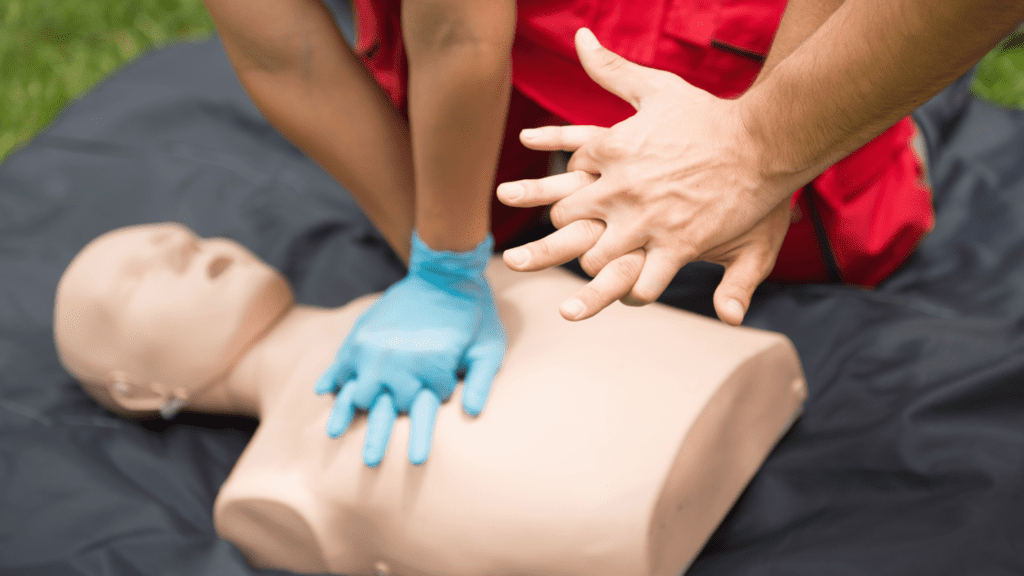
Medical simulation equipment Canada suppliers understand this context, but not all manikins handle it equally. Prestan models ship in rugged bags, with light but rigid torsos and heads that don’t deform under repeated packing. The famous clicker that sounds at correct depth cuts through a noisy gym. The chest rise is visible from across the room, allowing one instructor to correct three stations at once. That kind of practicality is gold when you are trying to maintain a ratio of 1 instructor to 6 students and keep the energy up.
Why feedback is not a luxury
CPR is a psychomotor skill with narrow targets. Adult compression depth needs to land around 5 to 6 cm, rate near 100 to 120 per https://louistlih516.tearosediner.net/comprehensive-first-aid-oxygen-supplies-in-canada-for-clinics-and-ems minute, and complete chest recoil is essential. Ventilations should be enough to see visible chest rise, roughly 500 to 600 mL for most adults, avoiding hyperventilation. People are poor judges of depth and rate under stress. Without feedback, learners either go shallow and fast or deep and inconsistent.
Guidelines from the American Heart Association, reflected in Heart and Stroke Foundation of Canada programs, recommend using feedback devices for training whenever possible because they improve CPR quality. Prestan’s visual rate monitor, which uses a simple green band at the correct rate and amber and red for too slow or too fast, has proven both intuitive and effective for beginners. The tactile click for compression depth gives an immediate yes or no that does not require a smartphone. In crowded classes and remote sites that matters. You can, of course, add Bluetooth or app-driven platforms for deeper metrics, but the built-in mechanical feedback remains a strong baseline that rescues struggling learners.
Cost, durability, and the math that keeps programs afloat
Budgets define what is possible. Colleges will often invest in a few high-fidelity CPR manikins for advanced skills labs, then run most certification courses on mid-range models. Community organizations stretch every grant dollar. Corporate clients sometimes buy their own kits if you can show the total cost of ownership over three years.
Prestan CPR manikins Canada pricing typically lands in a sweet spot. A four-pack of adult torsos, depending on vendor and options, often costs several hundred to a bit over a thousand Canadian dollars, while comparable sets from premium lines may run higher. Consumables are predictable. Lung bags are inexpensive per unit, face shields are available in bulk, and torsos hold up to repeated class cycles. I have taken sets through more than 300 student sessions before needing a part beyond lungs and faces. When pieces do fail, the modules are simple to replace with a screwdriver.
Contrast that with high-end devices whose electronics drift or whose proprietary batteries are pricey. Laerdal manikins Canada, for example, include excellent offerings like Resusci Anne QCPR and Little Anne QCPR, which provide sophisticated metrics when paired with apps. They are superb in data-rich programs and for instructor development. But they ask for more careful handling, frequent firmware attention, and a line item for accessories. That is not a knock on Laerdal, which remains a leader in high-fidelity training ecosystems. It is a reminder to match the tool to the training volume, venue, and support model you actually have.
The Prestan classroom feel
Students respond well to gear that looks human enough to be taken seriously but not so lifelike that they hesitate to touch it. Prestan’s face and thorax design strikes that line. The sternum landmarks are unambiguous, the mouth is accessible without fiddly parts, and the chest recoil is springy, not sticky. The airway path is set to reward gentle head tilt and chin lift with visible chest rise, while punishing overzealous squeezing of the bag with a quick, dramatic lift that makes learners self-correct.
I run a rhythm for first timers: one minute of compressions with the clicker enabled, a quick debrief based on what they saw in the LED band, then a round with the clicker muffled. Most maintain good depth after the first round, and the LED keeps their rate honest. The gain is especially obvious in older learners who worry about breaking ribs and in younger learners who imagine they are stronger than they are.
Comparing Prestan with Laerdal, and when to choose each
You will not find many instructors who have not used Laerdal. Their portfolio spans the whole stack from entry-level torsos to SimMan, a high-fidelity platform that anchors advanced simulation. For standard CPR and AED certifications, the decision usually comes down to how much you value app-driven analytics.
Laerdal QCPR manikins shine when you need real-time metrics like full recoil percentage, hand placement accuracy, and ventilation quality captured on a tablet. If you are training instructors, auditing a program, or running competitions, that data elevates performance. The tradeoff is complexity and cost.
Prestan favors immediacy. The tactile click and visual band require no pairing, no passwords, and no firmware. That sounds trivial until you are in a school gym with spotty Wi-Fi and a principal pacing at the door. Prestan’s ecosystem is broad enough to cover adult, child, and infant scenarios, plus AED trainers that mimic common pad placements and prompts. For many programs, that breadth, married to rugged design, is the deciding factor.
If your program includes advanced team-based resuscitation, airway adjuncts beyond basic bag-mask ventilation, or integrates into a nursing or paramedic curriculum with debriefing software, Laerdal’s higher fidelity path makes sense. For day-in, day-out certification of lifeguards, warehouse staff, security officers, and healthcare support workers, prehospital and public access CPR, Prestan maps better to reality.
A note on airway training
Airway training manikins Canada exist on a different spectrum. If you plan to teach oral airway insertion, nasopharyngeal airways, supraglottic devices, or intubation, you want dedicated airway trainers with realistic tongue, epiglottis, and vocal cord anatomy. Prestan and Laerdal both offer airway-specific models, but most CPR-focused manikins keep the airway simple to minimize maintenance and damage. For basic life support, that is a virtue. You get a predictable head tilt, a clear view of chest rise, and parts that survive eager but clumsy hands.
Programs that try to do too much with a CPR torso often end up with broken jaw hinges and frustrated learners. When the curriculum calls for advanced airway, bring in true airway trainers and keep your CPR fleet doing what it does best.
Hygiene and infection control without slowing the room
Canadian classrooms are still hygiene conscious. You see it in the way learners pause before giving ventilations, in the number of barrier devices pulled from pockets, and in instructor checklists. Prestan’s interchangeable faces and disposable lungs make turnover simple. I keep a separate bin with already Medical simulation equipment Canada assembled face-lung sets, snapped on during breaks. With a bit of routine, you can flip a full class in five minutes.
Cleaning protocols vary by organization, but most agree on non-bleach surface disinfectants effective against respiratory pathogens, applied with dwell time and elbow grease. The flat planes on Prestan faces and chests are quick to wipe, and the lack of deep crevices means less missed residue. During a harsh flu season we ran classes with one face per student, labeled zip bags for transport, and switched to bag-mask ventilation practice only. The manikins tolerated the extra handling and chemical exposure without visible wear.
Remote and harsh environments
Not every course runs in a climate-controlled training centre. I have checked torque wrenches in an open bay at minus 15 while learners wore gloves between drills. In winter, Prestan manikins tolerate trunk to room transitions without condensation inside the chest cavity that might fog sensors because there are no internal screens. In the North, where classes take place in multipurpose rooms with limited power and equipment may be flown in as checked baggage, the light frames and compact bags win friends.
Replacement parts availability also matters. When you book a week in a coastal community or a fly-in First Nation, you cannot rely on overnight shipping. Prestan consumables pack small and cost little, so you bring a cushion. For the rare breakage, the same screwdriver fixes all four units, and parts are not site-specific.
Students, confidence, and realism
Realism does not only mean skin tone and texture. It means learners recognize landmarks, feel the sternum give the right way, and see cause and effect. Prestan’s chest resistance is not identical to a human torso, but it lives in the right neighborhood, and the recoil is consistent across units. Hand placement guides are subtle enough that students have to find the lower half of the sternum with their own hands, which builds transferability.
Psychological safety is also a factor. Some high-fidelity manikins are so lifelike that new students hesitate, especially with infant models. Prestan’s infants are expressive enough to teach head position and gentle ventilation without triggering that pause. I have seen hesitant learners reset after a failed first try because the manikin gave neutral, clear feedback instead of blaring numbers or alarms. That keeps the room moving and builds competence through repetition.
Where high-fidelity CPR manikins fit
High-fidelity CPR manikins have a place in Canada’s training landscape. Hospitals and colleges use them for integrated simulations where you want to capture time to first shock, chest compression fraction, and leadership communication. When your debrief relies on granular metrics, the investment pays dividends. Laerdal’s QCPR platform, among others, supports these workflows with reliable connectivity, robust analytics, and instructor dashboards that reveal common errors.
The hurdle is not just purchase price. It is the ecosystem: devices to run the apps, time for software updates, deliberate cable management, and spare batteries. In a lab with a simulation technologist, that is routine. In a church basement with borrowed outlets, it becomes friction. That is why many organizations own a blend: a couple of high-fidelity units in the main campus and a fleet of Prestan torsos for outreach and recertification.
Buying from Canadian suppliers, and why it helps
Sourcing from Medical simulation equipment Canada distributors helps in three ways. First, warranty support and parts arrive quickly, with no customs delays. Second, documentation and packaging are bilingual where required, which matters for public institutions in Quebec and federal entities nationwide. Third, pricing is stable against currency fluctuations when the distributor carries local stock.
Ask vendors about CSA or equivalent certification for any electrical components like AED trainers. Most recognized brands meet safety standards, but due diligence prevents headaches during facility inspections. Also ask whether their bundles include consumables at training scale, not just a handful of lungs, and whether they can supply at short notice for seasonal surges.
A quick selector for program leads
- If you run large, mixed-experience classes across multiple sites with minimal tech support, prioritize Prestan CPR manikins Canada sets for adult, child, and infant, plus matching AED trainers. If your curriculum includes QCPR metrics in debriefs, audits, or instructor development, add a pair of Laerdal manikins Canada with app support to your core fleet. If you teach advanced airways, budget separately for dedicated airway training manikins Canada and keep CPR torsos focused on compressions and basic ventilations. If travel is constant, favor lighter kits with hard-wearing bags and pack double consumables. Canadian weather and shipping delays are real. If funding is uncertain, model three-year total cost of ownership, including lungs, faces, batteries, and likely repairs, then pick the mix that keeps classes running without cancellations.
Maintenance routines that prevent lost classes
I learned to treat manikins like vehicles. A light preventive routine avoids late class scrambles. After each course, we wipe surfaces, check the clicker response at the start and end of chest travel, inspect spring anchoring points, and verify the LED band with a quick burst of compressions. Weekly, we count remaining lung bags and face shields, reload each bag to a target number, and test the AED trainer pads for adhesion. Monthly, we rotate units so wear evens out and update any companion apps for the units that use them. This pattern keeps failures rare and predictable.
When parts loosen, it is usually a screw back-out that a quarter turn solves. If a clicker muffles or stops, a lung bag may be misrouted or torn. Ragged ventilations are often technique rather than equipment, so we have instructors demonstrate one slow, one-second squeeze with visible chest rise before any learner goes again. Building these checks into your rhythm keeps the room moving.
Cultural and language considerations
Canada’s classrooms are multilingual and multicultural. Clear, nonverbal cues reduce misunderstanding. Prestan’s rate indicator uses colors and movement rather than words. AED trainers from major brands include bilingual voice prompts or easy language switching. For signage and handouts, I keep paired English and French quick guides. Where possible, we stock manikins in varied skin tones so students are not practicing on a monoculture. It sends a message of preparedness and respect.
The instructor’s craft, supported by the right tool
Equipment alone does not make a good class, but the right tool amplifies an instructor’s craft. With Prestan, I can split a group into stations, assign a peer coach at each, and circle with targeted feedback. The combination of a clicker for depth and an LED for rate lets students self-correct, saving my voice for coaching hand placement and body mechanics. When a learner’s shoulders fatigue and depth creeps up, the absence of the click is unmistakable, and the partner notices too. That resilience at scale is how pass rates climb and post-class surveys sing.
Future proofing without chasing gimmicks
Guidelines evolve gradually. Compression depth and rate have held within similar ranges for years, with more emphasis on recoil and minimal pauses. Device makers now focus on connectivity and data sharing. It is smart to own some units that speak Bluetooth for audits and advanced classes. Just be wary of overbuying complexity that will sit in a closet when your volunteer instructors rotate. Prestan’s simplicity is a hedge against churn. You can add a couple of high-fidelity units as your program grows without sidelining the fleet that does most of the work.
Putting it together for your program
Take stock of your realities: class sizes, instructor bandwidth, travel, budget, and the credentials you issue. If you staff a central lab with scheduled simulations, Laerdal’s high-fidelity line deserves a seat at the table. If your mandate is to certify as many people as possible reliably across cities and small towns, put most of your dollars into rugged, feedback-rich torsos that you can throw in a hatchback. In my experience, that usually means building around Prestan.
The final metric is not the specification sheet. It is the student who clicks into the pocket at the right depth, holds a 110 per minute cadence with full recoil, and delivers a steady ventilation that just lifts the chest. When you see that happen across the room without constant correction, your equipment is doing its job. For many Canadian instructors, that is why the preorder goes to Prestan and why the kits come back looking scuffed, not delicate. They are built to work, and they help people learn skills that matter when it counts.